
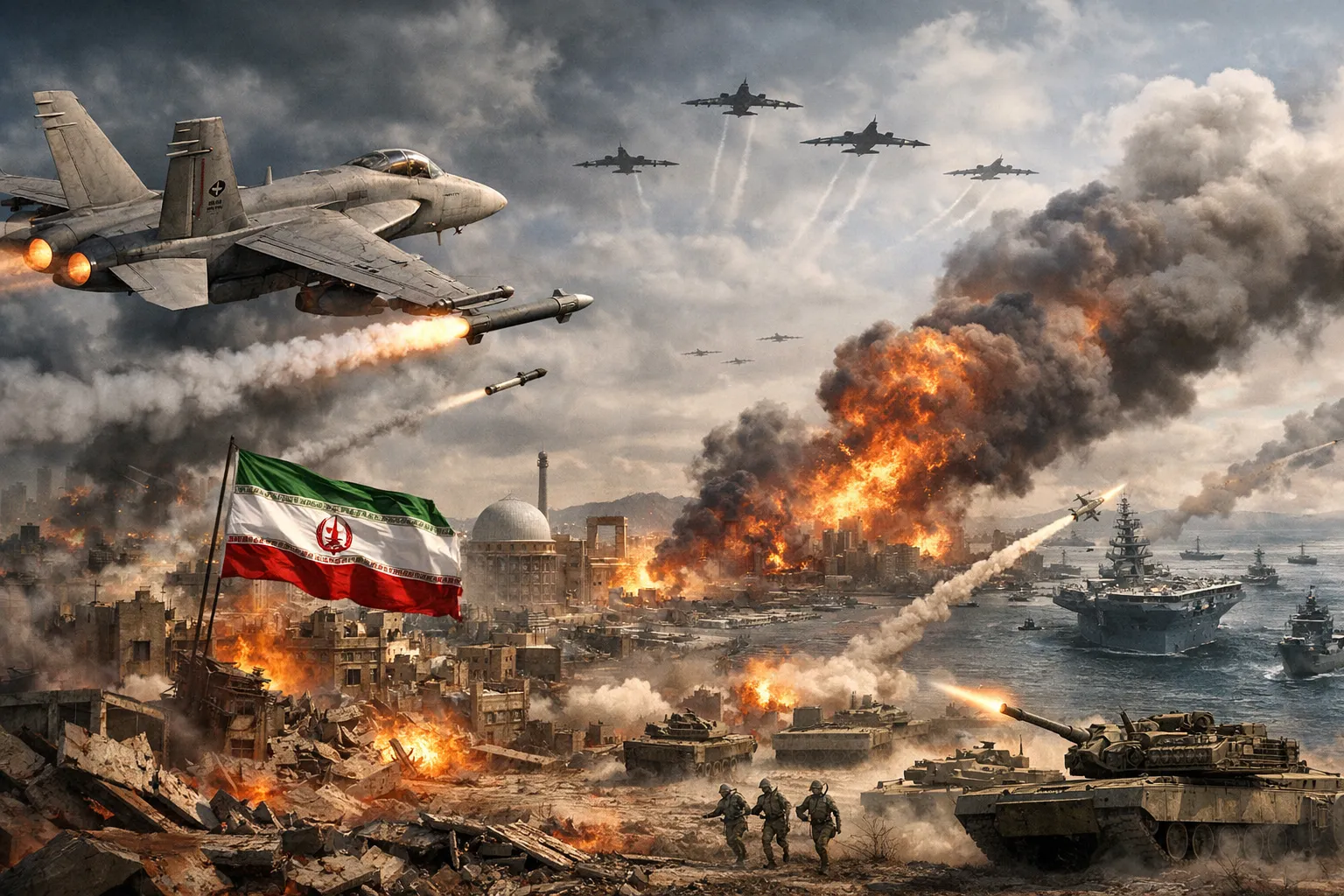
The concept of a “just war,” rooted in the writings of St. Augustine and adopted as foreign policy by the Vatican, is defined by three primary criteria: just cause (a legitimate reason for fighting), right intention (the desired outcome after the conflict), and proportionality (ensuring the military response is not excessive relative to the provocation).
Arguments for a Just War
Proponents argue that military action can be a righteous necessity when used to confront evil before it escalates. The core arguments include:
- Preventative Action to Save Lives: Drawing on historical examples, proponents argue that if “preventative war” had been taken against the Confederacy before the American Civil War or against Adolf Hitler in 1938, millions of lives could have been saved.
- Failure of Diplomacy: When a “dangerous nation” like Iran ignores years of dialogue and international agreements (such as the JCPOA) to continue developing nuclear weapons, proponents argue that military force becomes the only remaining option.
- Neutralizing Terrorism: Action is justified to stop a state sponsor of terrorism that arms groups like Hamas and Hezbollah, which results in regional instability and the deaths of thousands.
- Moral Responsibility to Stop Internal Brutality: Proponents point to regimes that murder their own citizens—such as the 30,000 Iranian protesters reportedly killed by their government—as a justification for intervention.
Arguments Against a Just War
Opponents, including high-ranking Catholic officials and some members of Congress, argue that the current military actions do not meet the traditional criteria for a just war. The arguments include:
- Lack of an Imminent Threat: Critics like Cardinal Robert McElroy argue that “just cause” is not met because there was no response to an existing or imminent and objectively verifiable attack.
- Rejection of Preventative War: Catholic teaching, as cited by Pope Benedict and Cardinal McElroy, categorically does not support war justified by speculation about future events.
- Priority of Dialogue: Pope Leo and other religious leaders advocate for the “thunderous sound of bombs” to cease so that dialogue can occur and the “voice of the people” can be heard.
- Human and Economic Costs: Opponents highlight the loss of service members’ lives, the massive financial drain (estimated at $1 billion a day), and the resulting economic stress, such as rising gas prices.
- Lack of Long-term Efficacy: There is concern that military strikes only temporarily degrade capabilities rather than providing a permanent solution, leading to questions about whether the sacrifice of lives is “in vain” if the regime can rebuild in a few years.
Based on the sources, we can conclude that the debate over a “just war” regarding Iran is a fundamental clash between traditional moral theology and modern preventative security strategies.
Specifically, the following key conclusions can be drawn:
- A Deep Ideological Schism: There is a significant divide within the Catholic community and broader political sphere. The Vatican and high-ranking officials like Cardinal McElroy maintain that military action is only “just” when responding to an existing or imminent, verifiable attack. In contrast, proponents like Bill O’Reilly argue this is a “righteous necessity” to confront evil before it escalates, citing the failures of the 1930s to stop Hitler as a cautionary tale.
- The Legitimacy of “Preventative War”: The core of the disagreement rests on the concept of preventative war. Catholic teaching, as expressed by Popes Benedict and Leo, categorically rejects war based on speculation about future events. Proponents argue that in the age of nuclear weapons, waiting for an “imminent” attack is too late and that the primary responsibility is to save millions of lives by acting early.
- The Limits of Diplomacy: There is a profound disagreement on whether diplomacy works. The Vatican and opponents of the war emphasize dialogue and the “voice of the people”. However, proponents point to years of failed negotiations (like the JCPOA) and the Iranian regime’s own admissions that they will continue nuclear development regardless of international pressure.
- Cost vs. Efficacy: Critics of the military action, such as Representative Ro Khanna, argue that the conflict has unsustainable costs—including $1 billion a day and the loss of service members’ lives—while only temporarily degrading capabilities rather than providing a permanent solution. Proponents, however, view the objective as neutralizing offensive capabilities “down to pistols” to stop decades of carnage.
- Shift Toward Negotiation: Despite the intensity of the bombing, there are signs that military pressure may be forcing a shift; unverified reports suggest the Iranian regime may be seeking to open talks as their capabilities are “obliterated”. This suggests that for proponents, military force is the necessary catalyst to bring an unwilling adversary back to the table.
What is your viewpoint on “Just War”?
.ghc.